05

Modernizing the Insurance Claims Experience

Insurance market
Innovative Insurance Solutions

[Project Overview]

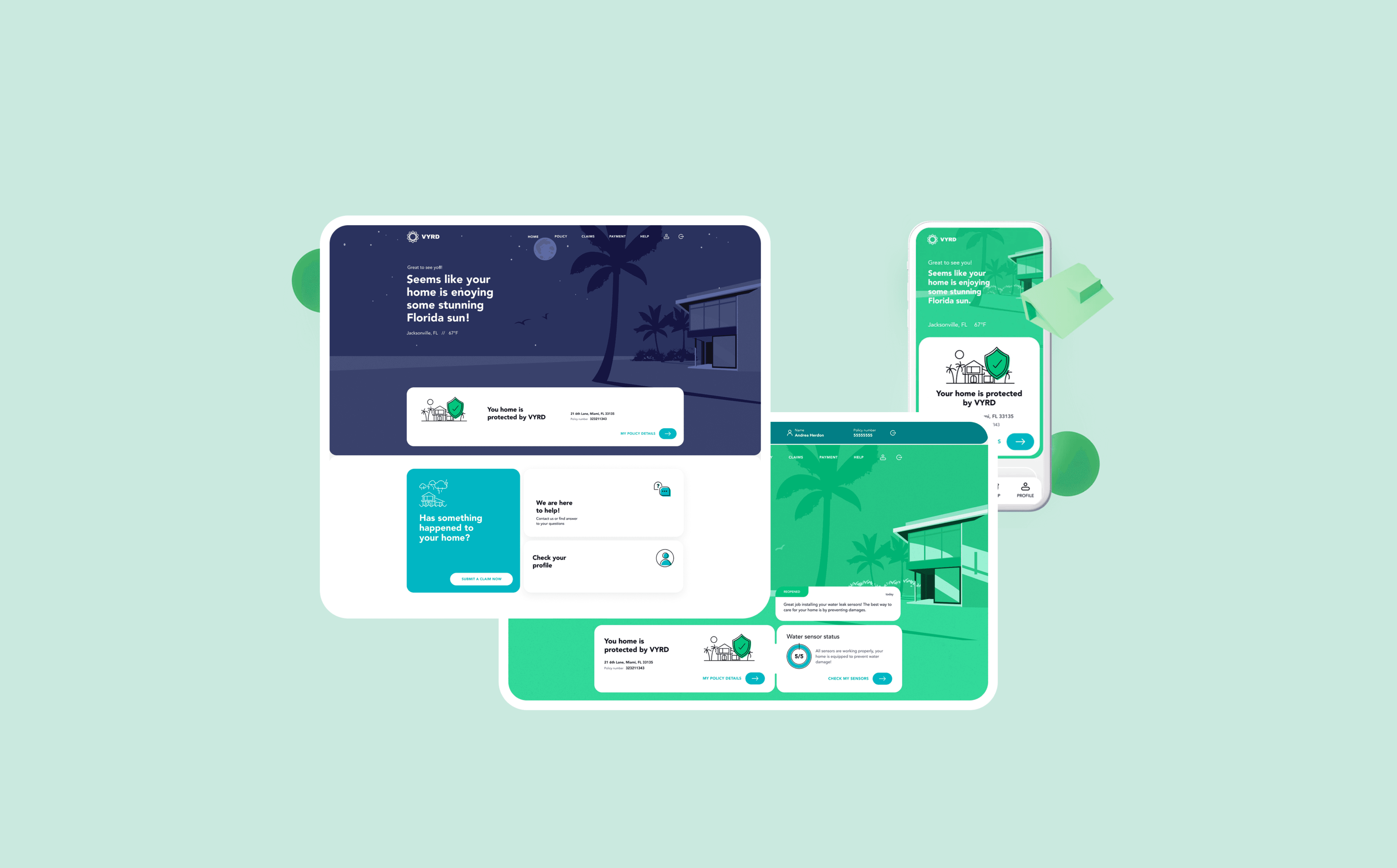
VYRD’s legacy claims process was complex and unintuitive, leading to frustrated users, high support volumes, and delays. The goal was to modernize the experience and create a scalable, user-friendly platform.


[Problem Statement]

VYRD’s legacy insurance platform was difficult to navigate and failed to support users during critical moments such as claims and payments.
Users faced fragmented workflows, unclear status visibility, and a lack of transparency, which led to frustration, high support volumes, and delayed actions.

At the same time, the Florida insurance market was under extreme pressure — increasing fraud, rising operational costs, insurer withdrawals, and low customer trust. Existing tools were not designed to scale or adapt to these conditions, making it difficult to deliver a reliable, user-friendly experience.

[Industry]

Insurance market

[My Role]

UI/UX Designer

[Platforms]

Desktop
[Process]

Research & Discovery

Reviewed existing claims, payments, and policy management flows to identify key friction points in the legacy platform.

Analyzed support tickets, operational data, and stakeholder inputs to understand where users experienced delays, confusion, and drop-offs.

Mapped end-to-end user journeys across critical scenarios (claims submission, payments, policy status).

Research & Discovery

Reviewed existing claims, payments, and policy management flows to identify key friction points in the legacy platform.

Analyzed support tickets, operational data, and stakeholder inputs to understand where users experienced delays, confusion, and drop-offs.

Mapped end-to-end user journeys across critical scenarios (claims submission, payments, policy status).

Research & Discovery

Reviewed existing claims, payments, and policy management flows to identify key friction points in the legacy platform.

Analyzed support tickets, operational data, and stakeholder inputs to understand where users experienced delays, confusion, and drop-offs.

Mapped end-to-end user journeys across critical scenarios (claims submission, payments, policy status).

[02] Insights

Users struggled with unclear process states, lack of transparency, and fragmented workflows across claims and payments.

High cognitive load and inconsistent UI patterns increased reliance on customer support.

Trust issues were amplified by the broader Florida insurance context, making clarity and predictability critical to user confidence.

[02] Insights

Users struggled with unclear process states, lack of transparency, and fragmented workflows across claims and payments.

High cognitive load and inconsistent UI patterns increased reliance on customer support.

Trust issues were amplified by the broader Florida insurance context, making clarity and predictability critical to user confidence.

[02] Insights

Users struggled with unclear process states, lack of transparency, and fragmented workflows across claims and payments.

High cognitive load and inconsistent UI patterns increased reliance on customer support.

Trust issues were amplified by the broader Florida insurance context, making clarity and predictability critical to user confidence.

Design Solution

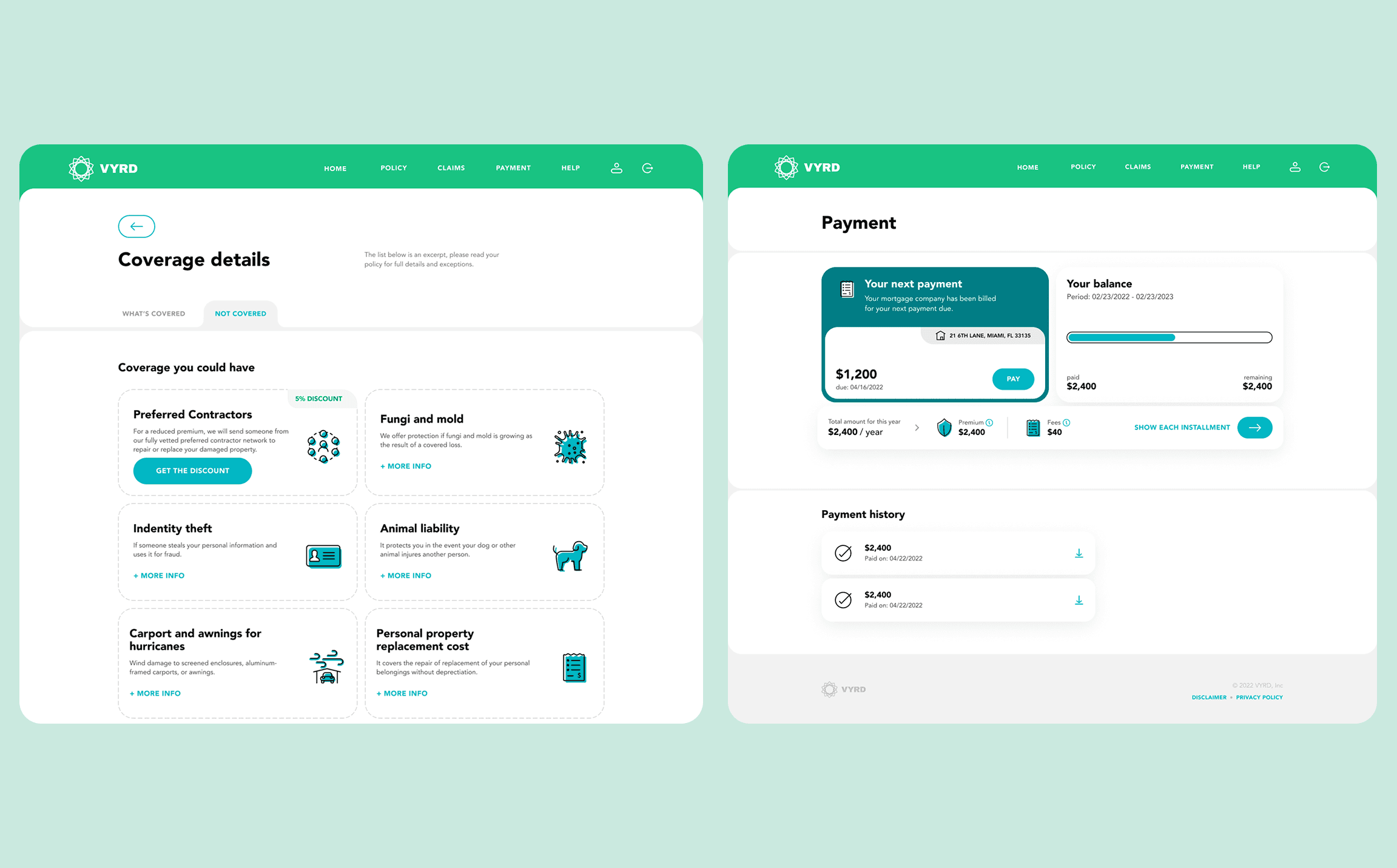
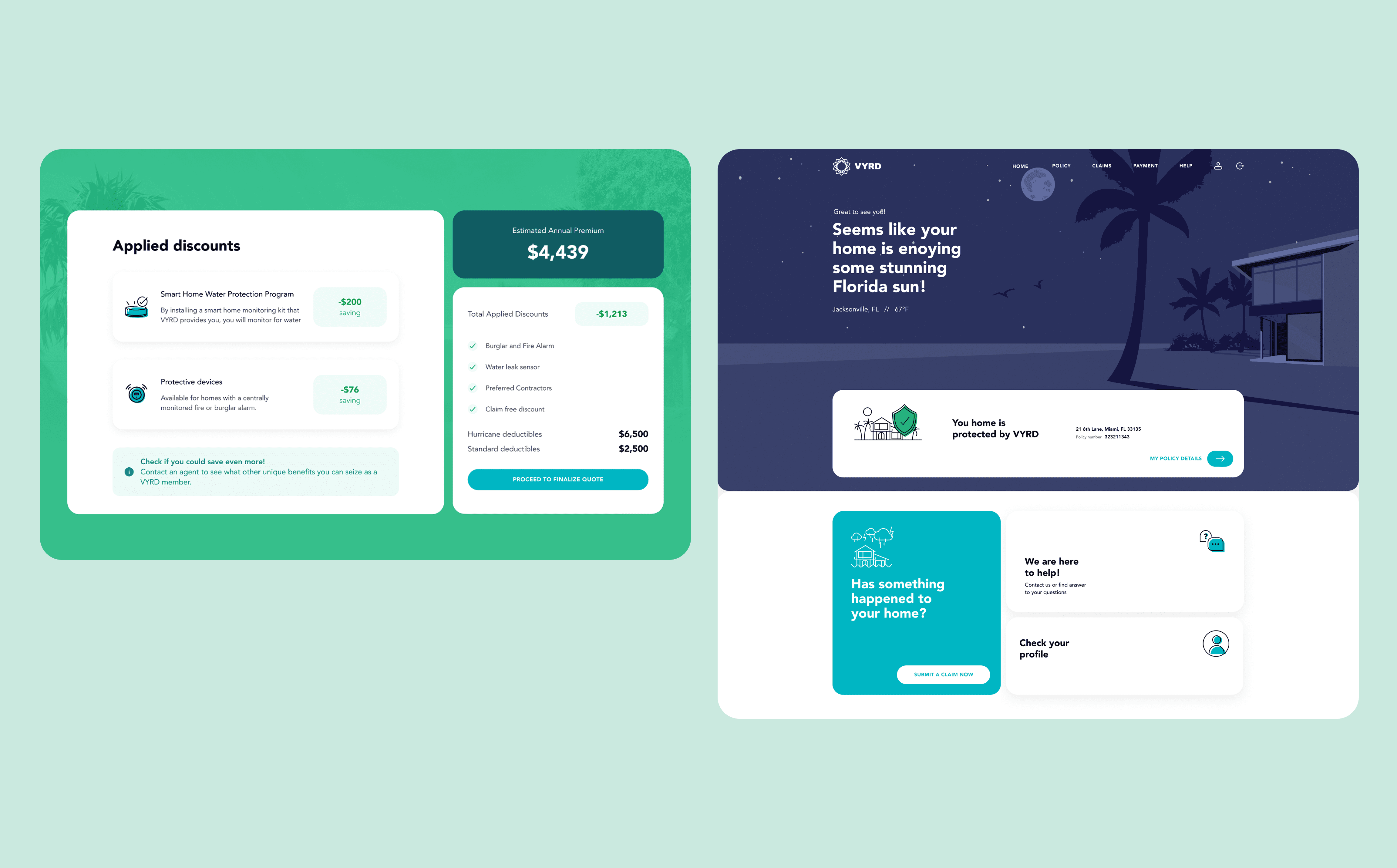
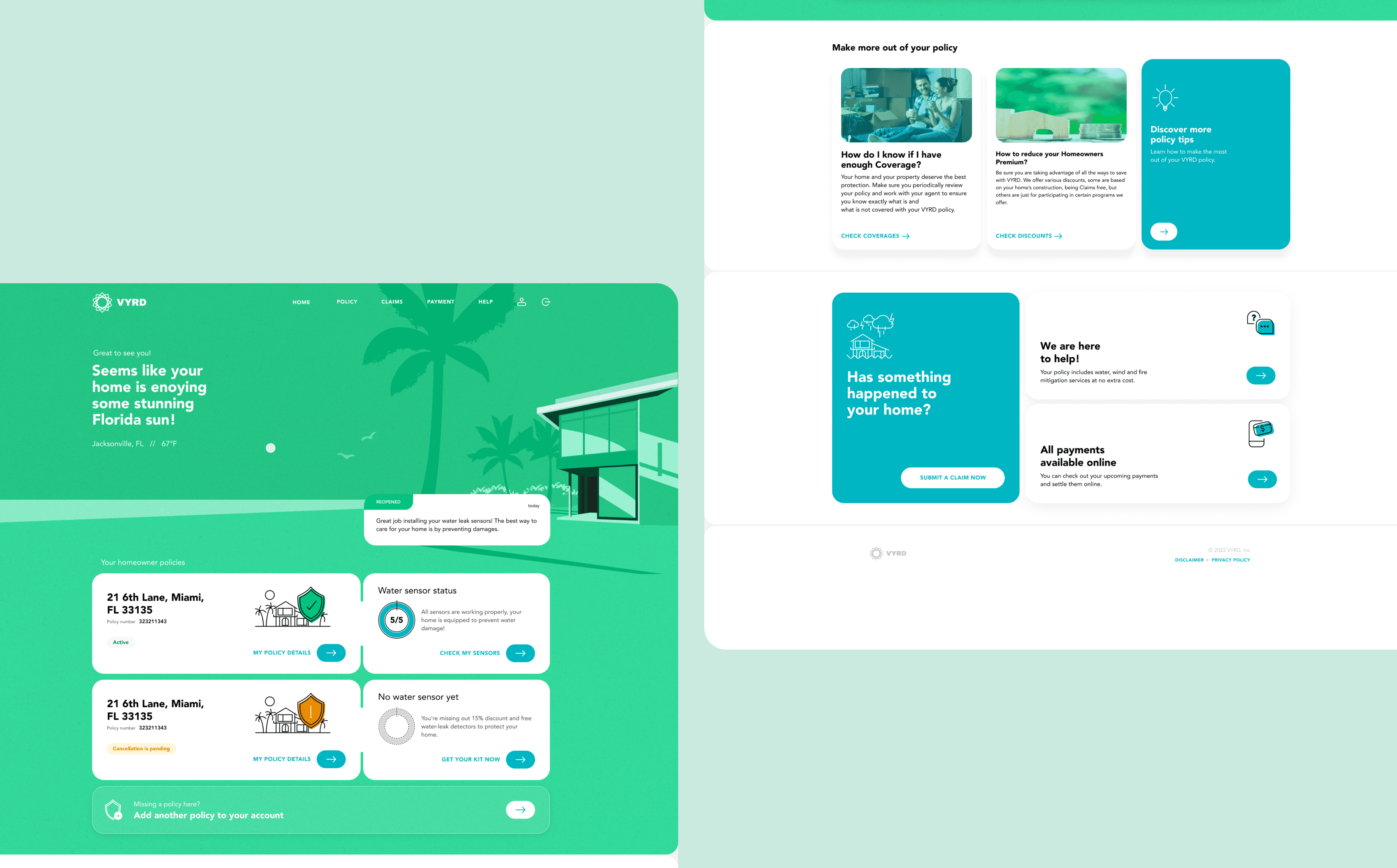
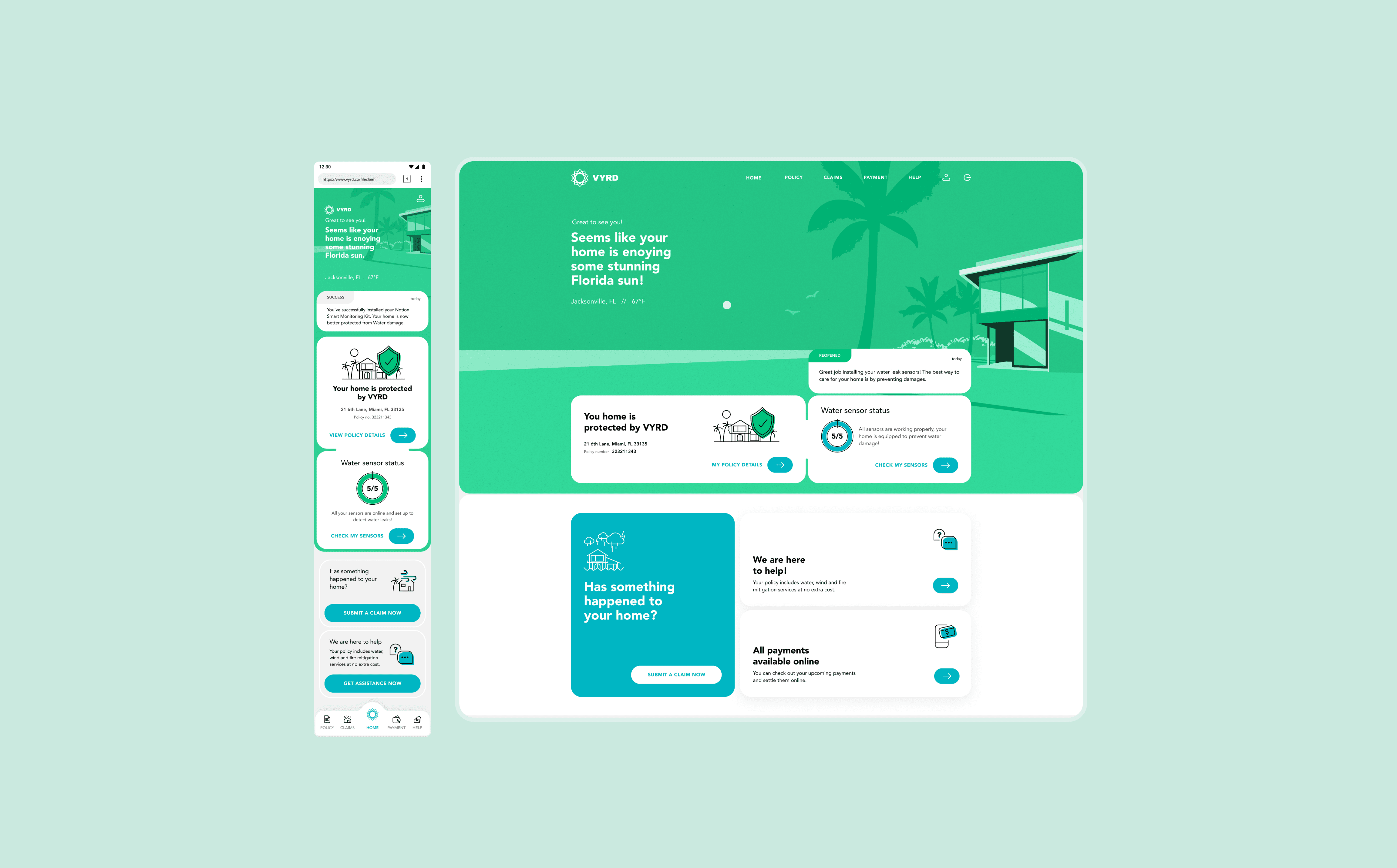
Redesigned core flows to simplify claims and payment experiences with clear status indicators and progressive disclosure.

Introduced a consistent information architecture and scalable UI patterns across modules.

Designed a self-service portal integrated with policy systems, third-party administrators, and IoT data to reduce manual intervention.

Design Solution

Redesigned core flows to simplify claims and payment experiences with clear status indicators and progressive disclosure.

Introduced a consistent information architecture and scalable UI patterns across modules.

Designed a self-service portal integrated with policy systems, third-party administrators, and IoT data to reduce manual intervention.

Design Solution

Redesigned core flows to simplify claims and payment experiences with clear status indicators and progressive disclosure.

Introduced a consistent information architecture and scalable UI patterns across modules.

Designed a self-service portal integrated with policy systems, third-party administrators, and IoT data to reduce manual intervention.

Testing & Iteration

Validated concepts through stakeholder reviews and usability testing on key flows.

Iterated on navigation, content hierarchy, and system feedback based on real user scenarios.

Ensured the solution supported scalability, data transparency, and future AI-driven features without increasing complexity.

Testing & Iteration

Validated concepts through stakeholder reviews and usability testing on key flows.

Iterated on navigation, content hierarchy, and system feedback based on real user scenarios.

Ensured the solution supported scalability, data transparency, and future AI-driven features without increasing complexity.

Testing & Iteration

Validated concepts through stakeholder reviews and usability testing on key flows.

Iterated on navigation, content hierarchy, and system feedback based on real user scenarios.

Ensured the solution supported scalability, data transparency, and future AI-driven features without increasing complexity.

The new architecture and UX patterns enabled future expansion across policies, devices, and data-driven insurance features.
Transparent billing, payment tracking, and claim visibility helped rebuild customer trust in a high-risk insurance market.

Trust is a core UX requirement

In insurance, clarity and transparency are not “nice to have” — they directly impact adoption, retention, and brand credibility.

Trust is a core UX requirement

In insurance, clarity and transparency are not “nice to have” — they directly impact adoption, retention, and brand credibility.

Trust is a core UX requirement

In insurance, clarity and transparency are not “nice to have” — they directly impact adoption, retention, and brand credibility.

Simplification reduces risk

Reducing cognitive load in complex financial flows lowered errors, improved task completion, and decreased reliance on support teams.

Simplification reduces risk

Reducing cognitive load in complex financial flows lowered errors, improved task completion, and decreased reliance on support teams.

Simplification reduces risk

Reducing cognitive load in complex financial flows lowered errors, improved task completion, and decreased reliance on support teams.

Systems must scale

Designing flexible, modular UX patterns early made it possible to adapt quickly to regulatory changes, market instability, and future AI-driven features.

Systems must scale

Designing flexible, modular UX patterns early made it possible to adapt quickly to regulatory changes, market instability, and future AI-driven features.

Systems must scale

Designing flexible, modular UX patterns early made it possible to adapt quickly to regulatory changes, market instability, and future AI-driven features.

Select this text to see the highlight effect